“You’re in for some exciting times with me,” Letschert said in 2016 when she arrived from Tilburg to become rector in Maastricht. “Did I really say that?” She can’t remember, but Observant does. In fact, it was the headline above Observant’s first interview with her. “Well, I think it certainly turned out to be an exciting ten years.” At one point, she admits, she longed for “an uneventful term, but it was an illusion to think that would ever happen. Society is under pressure, and it filters down into our jobs and institutions.”
Ten years of events at UM flash by in a matter of minutes. First up is the December 2019 cyber-attack that brought the university to a standstill. Just when that was over and Letschert was hoping for a quiet spring break, all universities were forced to close due to Covid. “It was a difficult time.” Letschert’s son and daughter had to take online classes from home; her youngest, still in primary school, needed a lot of support. On top of everything else, Letschert was going through a divorce. “At the same time, I wanted to be there for the university. Operational processes were still running, and everyone had their own worries, fears and feelings of loneliness. I worked very closely and enjoyably with the heads of the Education Offices to decide what to do about exams, how many exceptions could be made and how to invigilate online exams without infringing on students’ privacy. After all, they were taking exams from home.”
Threatening
In 2021, Letschert moved from her role as rector to president of the Executive Board. As university president, she was soon confronted with an issue that would remain a headache until late last year: the national debate on the internationalisation and increased use of English in Dutch higher education. It was Ingrid van Engelshoven, the D66 minister of education in the third Rutte cabinet, who proposed the Language and Accessibility bill. “As language became an increasingly central issue, the situation started to feel threatening to UM.” Letschert began lobbying in Limburg, finding many allies who, like her, wanted “UM to be allowed to remain what it is – both international and European”. She delivered that message to the national government, loud and clear. It wasn’t difficult to get local and regional authorities on the university’s side: collaboration was already in full swing, with UM working on campuses in Venlo and Heerlen, and Letschert made sure to show her face everywhere. “I visited municipal councils and attended events like Cultura Nova in Heerlen and Carnival Saturday in Maastricht. I genuinely enjoyed it and wanted to show my commitment. If I invest in a relationship, I feel more comfortable asking for something in return, otherwise it would feel opportunistic to me.”
A coup of sorts
“A tense time for me personally was the conflict with the University Council over a new procedure for appointing deans.” This happened in October 2019.
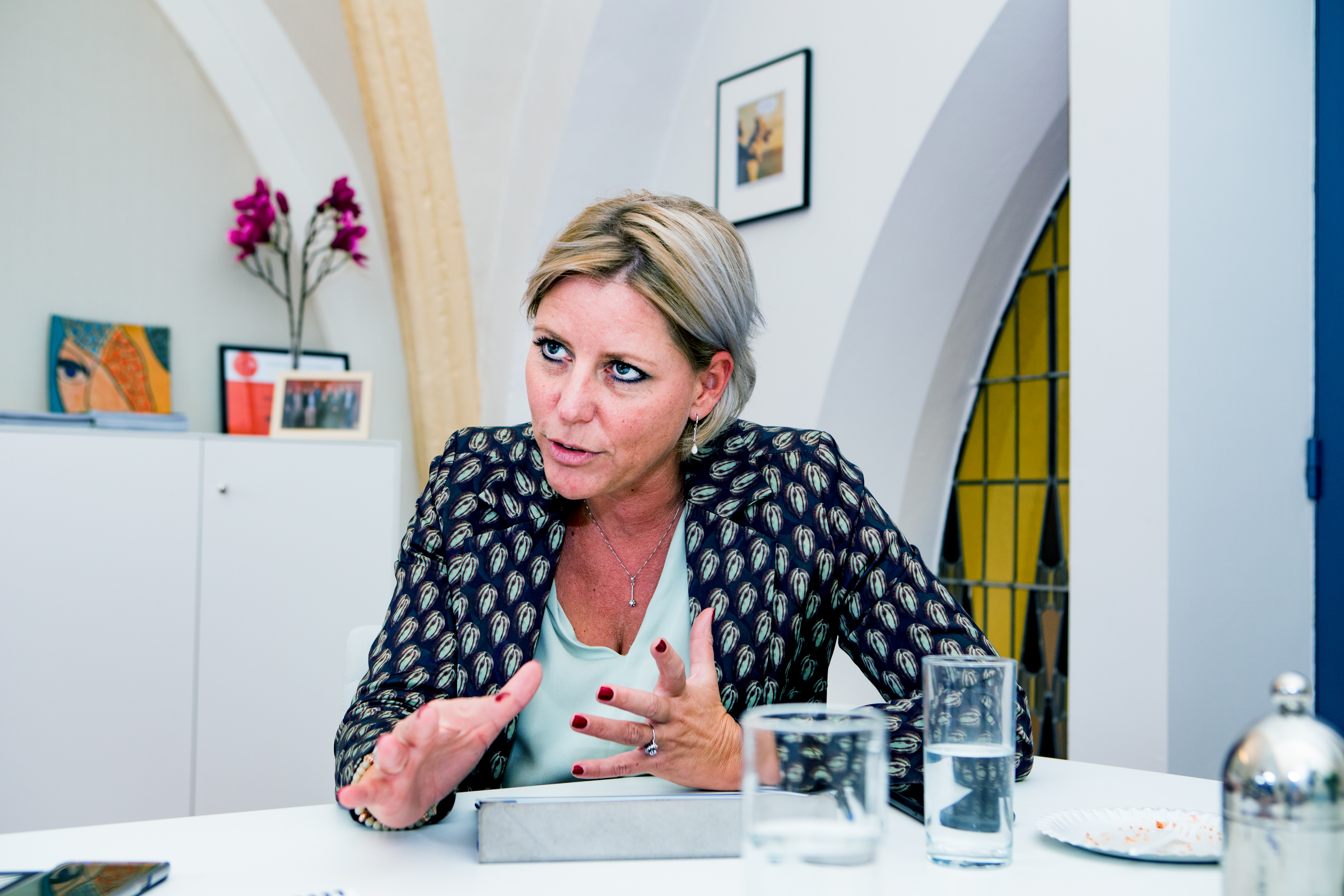 Rianne Letschert, 2019 Photo: Loraine Bodewes
Under the rules at the time, deans were appointed by the Executive Board based on the recommendation of an appointments advisory committee, of which the rector was a member. Letschert proposed new rules under which the entire Executive Board would sit on the committee – effectively issuing recommendations to itself. She also proposed that UM recruit internally and externally at the same time (under the existing rules, the university turned to external recruitment only if no suitable internal candidates were found).
The University Council opposed the new procedure. They described it as “a coup of sorts”, a power grab by the university’s top administrators. The dispute was referred to the Supervisory Board, but it never came to a formal dispute process. After the Supervisory Board’s mediation, the Executive Board withdrew the proposal. Looking back, Letschert is still of the opinion that external dean candidates should be considered alongside internal applicants. This is allowed under the current rules. “Being a dean is hard, and not everyone is cut out for the job. Why not simultaneously look for external candidates? It brings more diversity.” How did she feel about being accused of a coup? She understands the concern that the board was trying to gain more power, “but that was never the case here. I actually find it odd that only one Executive Board member is allowed to sit on the appointments advisory committee. All three of us have to work with the deans.” She recalls her time as an academic staff member in Tilburg: “Back then, I sometimes found myself wondering: ‘Why is the Executive Board sticking its nose into this?’, so to speak. But now that I’m in this central role myself, I understand the responsibilities much better. I wish everyone could swap roles once in a while, try on a different hat.”
Recognition and Rewards
One of her proudest achievements is the Recognition and Rewards programme, behind which she was also a national driving force. The programme aims to change academic culture so that researchers are recognised not only for research, but also for teaching, leadership and other academic contributions. But implementation of the programme has been slow, according to a recent survey among early career researchers by the Maastricht Young Academy. Many have noticed no difference, and they criticise the lack of transparency, unclear assessment criteria and uncertain career prospects.
"If things escalate, I face them head-on"
Letschert acknowledges some of these concerns: “We as the Executive Board need to do something about this. We can keep talking about cultural change, but it’s taking so long. We can’t and shouldn’t want to go back – it’s already too deeply embedded. And who knows what I might be able to do as minister? I’m not entirely sure yet, because I think it’s up to the universities now, but if I can help speed things along, I certainly will.”
She takes pride in the fact that a considerable number of academic staff members with teaching responsibilities have been promoted to professorships. She also praises the deans for “the progress they’re making. It’s also important to understand that it was never the intention that everyone would notice a difference. We can’t promote everyone. In a football lineup, you only need one goalkeeper. Sometimes someone can’t pursue their chosen career path within their department. We need to be able to have those difficult conversations – something academia isn’t always good at.”
“I value clarity”
Is she good at having those difficult conversations? “I value clarity. If things escalate, I face them head-on.” She cites the example of the Institute for Evidence Based Education Research (TIER). Its master’s programme was discontinued after failing a quality assurance assessment. The Executive Board had decided not to draw up a plan to remedy the shortcomings, and in 2017, the entire institute was closed down.
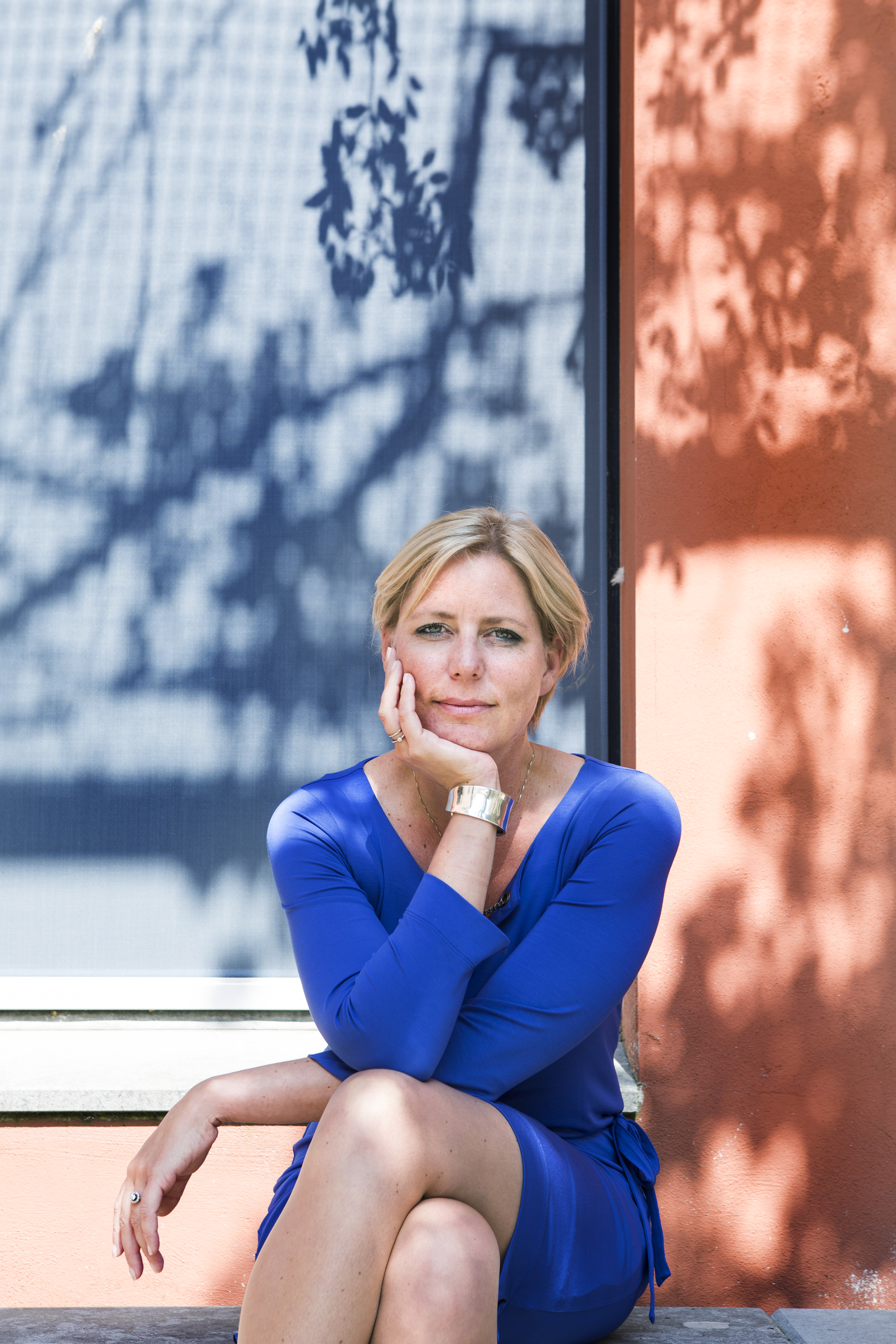 Rianne Letschert just before becoming rector in 2016 Photo: Loraine Bodewes
“As rector, it was my job to inform the staff. If looks could kill, I would have died on the spot. Everyone was furious, from the secretary to the lecturers and professor. And you know what? I would have been just as angry if it had been my institute. I explained the decision and helped make sure that all those people ended up in good positions elsewhere in the university. I believe you have to be able to back up difficult decisions and be honest and respectful – that’s the key.” But perceptions can differ: the staff involved did not feel that respect at the time, as they told Observant.
Dismissal case
Letschert has a reputation for getting involved in matters beyond her immediate purview. For example, there was friction between two (far from friendly) departments within the Faculty of Health, Medicine and Life sciences. She received complaints about social insecurity in her mailbox. In addition, a professor had (wrongly) accused a fellow professor of sexual misconduct. Letschert decided to conduct an independent investigation into the situation in the workplace at both departments.
Should this not have been Dean Annemie Schols’ responsibility? “I didn’t bypass her – we agreed on handling the situation that way. There was a vote of no confidence against the dean, so the dean couldn’t deal with it herself.” Ultimately, a dismissal case followed, “which is up to the Executive Board anyway.” Letschert personally met with staff from both departments multiple times. “They wanted to talk to me, and I don’t walk away from that. Some people were deeply affected by everything that had happened.” Many of these meetings took place in the evenings, since her schedule was already packed, “but I wouldn’t have had it any other way. Having the opportunity to tell their stories made them feel seen and heard.”
Narcissists
Social safety was a major theme throughout those ten years, “and it’s never done”. All managers at UM are now required to complete a module on social safety, including training using actors. Letschert calls it “an important statement. One module won’t change everything, obviously, but it shows that we take the issue seriously. And it reaches the bullies and narcissists who would never have completed it voluntarily.”
In some cases, the message still falls on deaf ears. In a 2020 interview with the Dutch daily newspaper Trouw, Letschert said that she had fired “several macho narcissists. And no, it wasn’t pleasant, but it was necessary.” Now, she says, “I’ve become firmer about that. If that’s how you behave, you don’t belong in our community. At the same time, dismissal procedures take a very long time. You have to provide thorough justification, and the investigations involved take up a lot of time, not to mention the potential legal procedures afterwards. Non-leadership staff often don’t understand this, and I get that.”
“Leadership is hugely underestimated – like anyone can do it,
show vulnerability when needed"
Leadership itself is a skill, Letschert says. “It’s hugely underestimated – like anyone can do it, show vulnerability when needed, or take criticism well.” She recently demonstrated that vulnerability herself when meeting with the directors-generals of the Ministry of Education, Culture and Science. “I told them, ‘I’m new to this job, so if I do something wrong, too fast or too slowly, please tell me so I can do something about it.’ They appreciated me saying that. To me, it just made sense.”
Naïve view
What did she have to unlearn during those ten years? “I’m very attuned to my surroundings. If I pick up on discomfort, or sense that someone is feeling uneasy, I want to jump in and fix it. I’ve learnt that sometimes I just need to let it go and literally sit on my hands.”
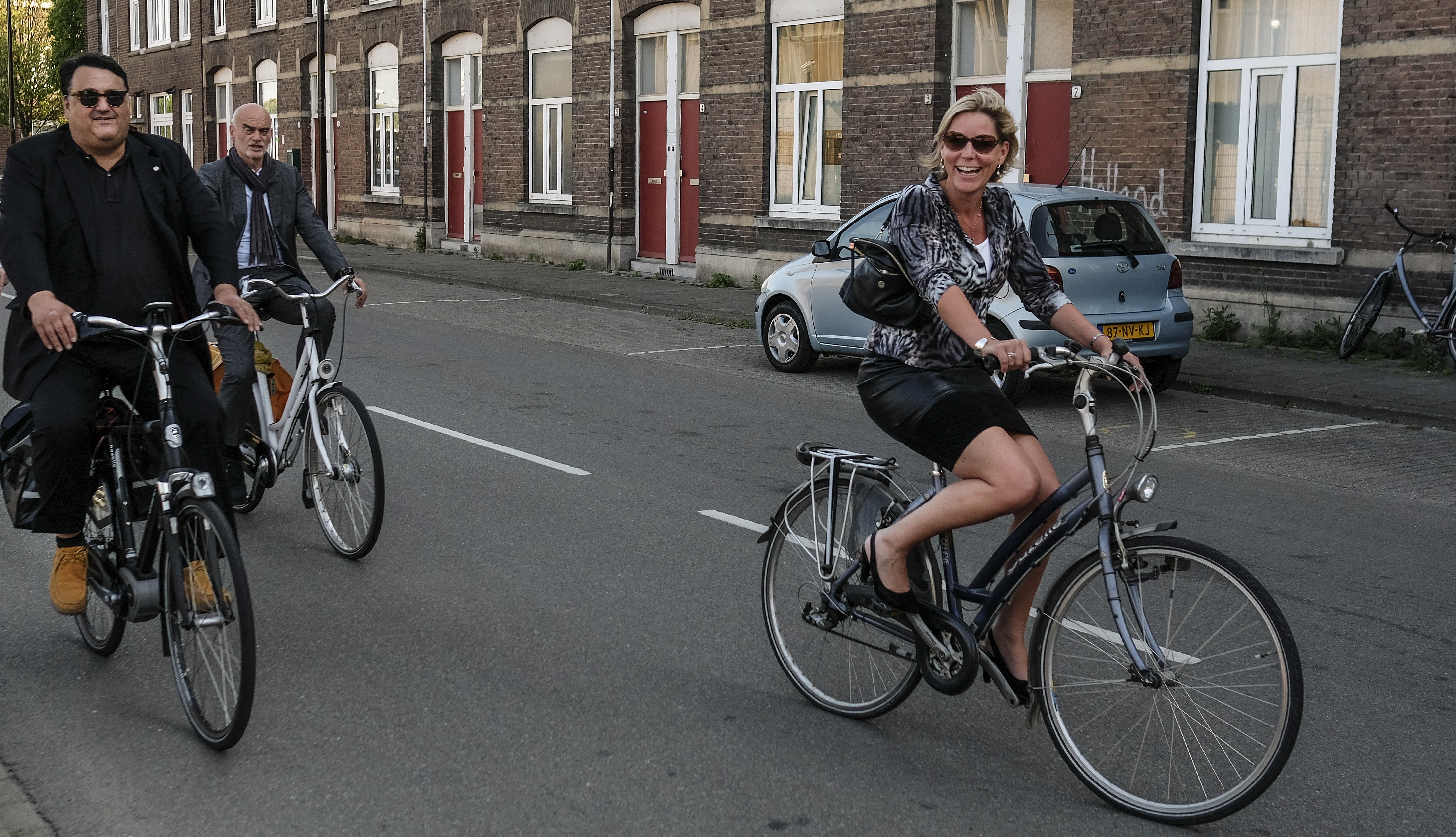 The Executive Board cycling, in 2017, visiting several student associations Photo: Joey Roberts
There have inevitably been disappointments. “When I started here, I had a somewhat naïve view of people. I believed that if you supported someone enough, and gave them the opportunity to grow, the good in them would naturally emerge. People aren’t monsters. Even in wartime situations, which I’ve researched extensively, things aren’t black and white. But that view wasn’t entirely accurate. I’ve come to realise that some people have little or no capacity for self-reflection. They simply don’t see the effect they have on their own staff, for example. They refuse to take a helping hand or engage in efforts to improve. I’ve learnt to let go sooner and stop wasting energy on things like that. It eats up so much of your time.”
She also hadn’t anticipated how slow decision-making at a university can be. She isn’t referring to the fact that many proposals have to pass through the University Council and the Local Consultative Body; she describes them as “very constructive and well prepared” and praises their commitment. Rather, she’s talking about departments that hesitate to act. “Just come to the Executive Board. Or make a decision. Too often, people are afraid to take risks.”
Pro-Palestinian protests
Some issues are simply incredibly complex. As she has said before, the hardest decision in her ten years at UM was calling in the police to end the occupation of University College Maastricht by pro-Palestinian protesters in June 2025. “In a situation like that, you can never get it right. There’s no room for nuance on either side. At the same time, I’m both a scholar and an administrator. My own academic community [Victimology and International Law] concluded that what is happening in Gaza is genocide. But as university president, I had a different role. I had to be there for the pro-Palestinian protesters, whose concerns I understood very well, but their methods less so. And I also had to be there for our Jewish students and staff, who felt threatened and deserved support. I usually sleep well, but this kept me up at night: am I doing the right things? It was a very tense situation. Just like UM’s 50th Dies Natalis – it was supposed to be a celebration, but with the announced pro-Palestinian protest, we were mainly preoccupied with whether everyone was safe and we hadn’t overlooked anything. Walking to the drinks afterwards, I mostly felt relief. Of all the issues I’ve dealt with, this one caused the most stress.”
Proud
What is she proud of? “Of the fact that many more women now hold important positions, and of Europe, of course! UM is now the ‘European university’ of the Netherlands. Before I came here, I barely knew Maastricht – I sometimes went shopping in the city with my mother. I didn’t know the region or the university, except for a few colleagues in my field.”
“He was also very protective: ‘You work too hard’”
Europe was already a focus of research and teaching at UM. This was further reinforced by initiatives such as Studio Europa, an expertise centre for research, public debate and European heritage in the context of the Maastricht Treaty. The centre was headed by Europe expert Mathieu Segers.
Segers and Letschert became friends. His death in 2023, at just 47, was one of her most difficult moments. “Being there at his funeral, his children still so young – it was devastating.” A year later, Nanne de Vries passed away shortly after retiring as professor and administrator at the Faculty of Health, Medicine and Life Sciences. “I was friends with him, too. We supervised a PhD together. He always criticised me, but in a friendly way: ‘What are you up to with HR now?’ At the same time, he was very protective: ‘You work too hard.’”
International outlook
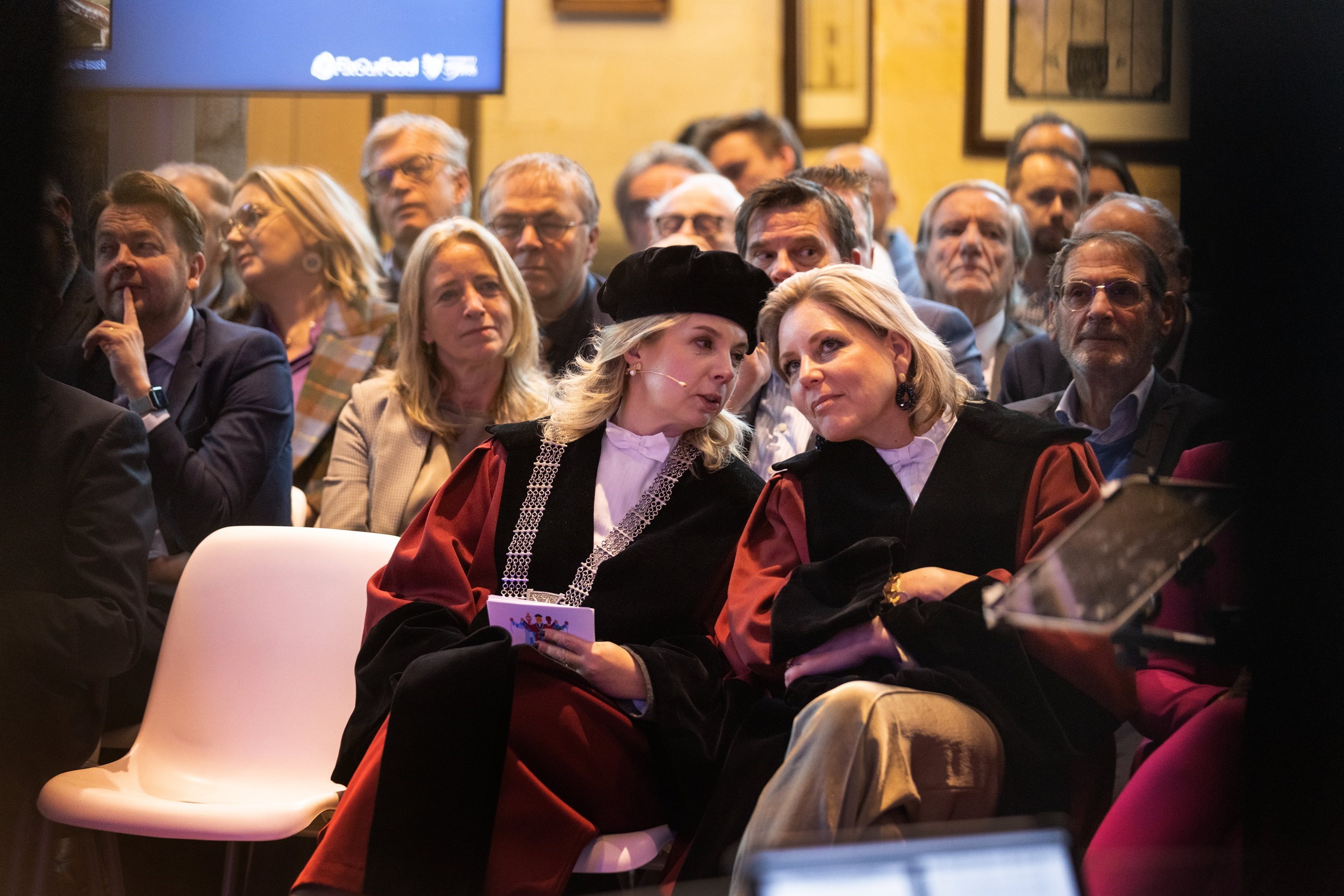 During the Dies in 2025 with at the left rector Pamela Habibovic Photo: Philip Driessen
Letschert will bring her international outlook to her ministerial role, she says. “I know all fourteen Dutch universities well. We’ve had extensive discussions about balancing internationalisation in higher education; those conversations were very open and strategic. I know their concerns. I’ve also worked closely with universities of applied sciences, and I’m familiar with the vocational education sector, partly through my role as chair of the National Growth Fund. Many of its projects focused on collaboration between universities of applied sciences and vocational institutions. All of this knowledge will definitely help me, but I also want to draw on experiences abroad. Take Scandinavia, where a lot of universities of applied sciences have merged with universities, or the UK, which has recently developed a global talent strategy. I want to know how they deal with issues and learn from their experiences. Culture and media are new policy areas for me – I’ll need to get up to speed.”
Thick skin
Does she have thick enough skin for a ministerial post? “Does that mean being callous? I don’t think that would be a good thing. But when it comes to people stabbing you in the back or questioning your integrity – in short, when others aren’t playing fair – no, I don’t have thick skin. I’ll need [husband] Sander’s shoulder to cry on, and then move on. Because I don’t walk away from things. At the same time, I’ve promised my children and family that I won’t change as a person. I am who I am. I’m quite open and honest. I’m used to sharing information, and it has never steered me wrong – not at UM, not at Universities of the Netherlands, not in any of my roles. I’ll see what happens. I’ll be learning a great deal.”
Small ego
Finally, her party leader Rob Jetten keeps stressing that he wants ministers with “small egos”. How’s hers? She laughs. “I don’t really have an ego. At least, I think it’s small enough. I don’t need to be in the spotlight or on stage, although that sometimes comes with the role. I’m not the kind of leader who has to show off everything I do, ‘look at me’. Not to criticize people who do – it can be very effective – but it’s not my style. As informateur, I deliberately didn’t seek out the media every day. It was a break with tradition, but I explained that I didn’t have news to report every day, which was primarily up to the three negotiators anyway. That was respected. As a minister, I intend to continue to do things my way.”
Wendy Degens and Riki Janssen